Deep dive map - where to start and what to open next
If you are solving this exact problem right now, open the tools in the same order shown below and keep this article open as your checklist. This avoids skipping steps that usually cause rework.
Start with JSON Formatter, Regex Tester, AI JSON Schema Generator, AI SQL Query Generator, AI API Documentation Writer, AI Test Case Generator. Then continue reading Monthly Finance Planning with Practical Online Calculators, Hinglish to Hindi Workflow for Cleaner Devanagari Output, Privacy-First Browser Tools for Daily Workflows, Temporary Email and Alias Workflow for Safer Signups, SEO Content Workflow with Meta, Slug, and Reading Time Tools, Compress and Convert Images for Faster, Lighter Web Pages, JSON, CSV, and Base64: A Clean Data Conversion Workflow, Password and Identity Hygiene with Free Browser Tools, Plan Loan EMI, Interest, and Prepayment Without Surprises, GST and VAT Invoicing Without the Common Errors, Writing SEO Titles, Slugs, and Meta Descriptions That Work, Using AI Tools Responsibly for Content and Code, A Simple Routine to Improve Typing Speed and Accuracy, Network Diagnostics in the Browser: IP, DNS, Ping, and Ports for connected workflows.
Why payload bugs keep escaping to production
Most integration bugs are not complex logic failures. They are structural issues: missing fields, wrong type assumptions, weak patterns, and unclear query interpretation.
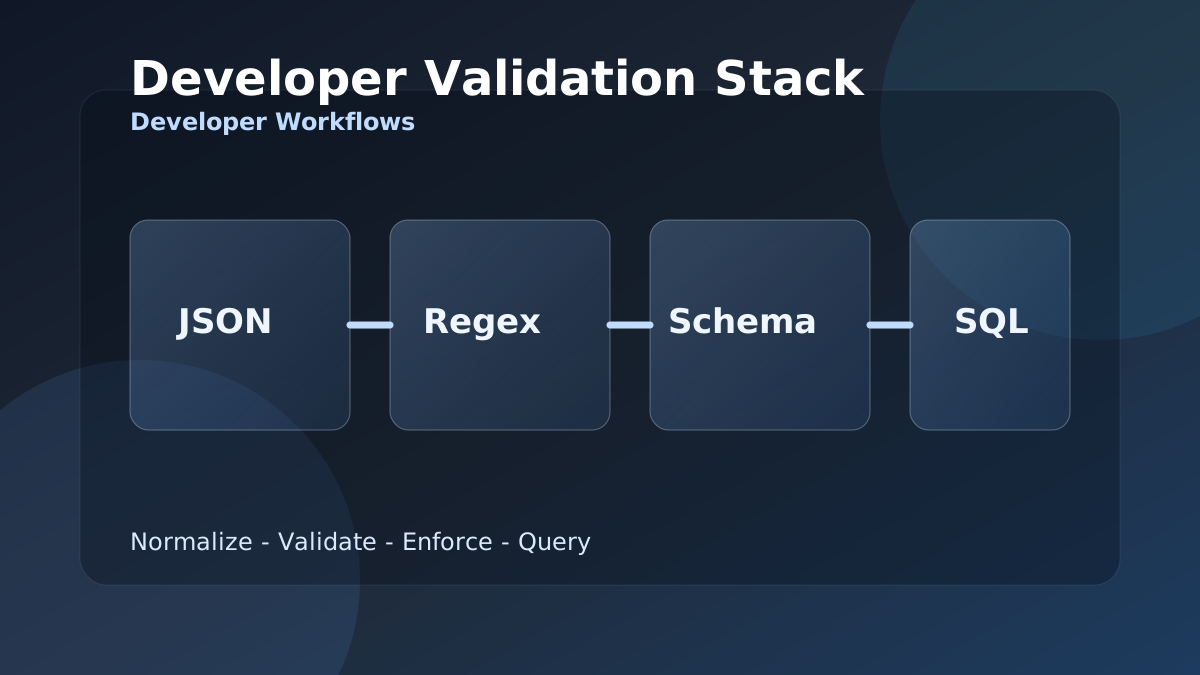
A deterministic validation sequence before deployment is the easiest way to reduce these failures.
Step 1 - Normalize raw data first
Run payload samples through JSON Formatter to remove syntax noise and expose shape clearly. This is the baseline before any validation or generation.
If your test data is copied from logs, normalize whitespace and escaped characters so validation behaves as expected.
Step 2 - Validate critical field patterns
Use Regex Tester for strict formats such as order IDs, phone numbers, invoice codes, and email patterns. Keep patterns readable and anchored.
Pattern validation should be explicit and versioned with examples, not scattered across ad-hoc code comments.
- Keep one source of truth for each critical regex.
- Test positive and negative cases before shipping.
- Avoid over-permissive patterns that hide quality issues.
Step 3 - Generate and enforce schema
Use AI JSON Schema Generator from cleaned sample payloads. Then review required fields and constraints manually before integrating into your backend validation layer.
Schema-first API work improves contract clarity for frontend and backend teams and reduces handoff delays.
Step 4 - Query and documentation handoff
Use AI SQL Query Generator to draft analytics queries from business questions, then review joins and filters with production-safe constraints.
Use AI API Doc Writer and AI Test Case Generator to finish the pipeline with readable docs and edge-case test plans.
Why this matters in real workflows
This stack is valuable because it mirrors the real lifecycle of data: input, validation, storage, query, and communication. Weakness in any stage creates expensive debugging later.
Teams that apply this sequence consistently ship cleaner integrations, resolve incidents faster, and reduce onboarding friction for new developers.
Why this is useful in depth
This sequence catches structure and pattern issues early, which means fewer hotfixes, cleaner dashboards, and faster backend-frontend handoffs.
Frequently Asked Questions
Can AI-generated schema be used directly in production?▼
Use it as a strong draft. Always review required fields, enum assumptions, and numeric constraints before production use.
Should regex validation be done on frontend or backend?▼
Both. Frontend improves UX; backend guarantees enforcement and security.
How does this help analytics teams?▼
Cleaner schema and field consistency produce more reliable SQL reporting and fewer broken dashboards.
Explore all blog posts
Continue with these internal links for more practical tool workflows.
Monthly Finance Planning with Practical Online Calculators
If your month-end budget keeps changing after every invoice check, this guide shows a stable calculator sequence for tax, EMI, SIP, and savings decisions.
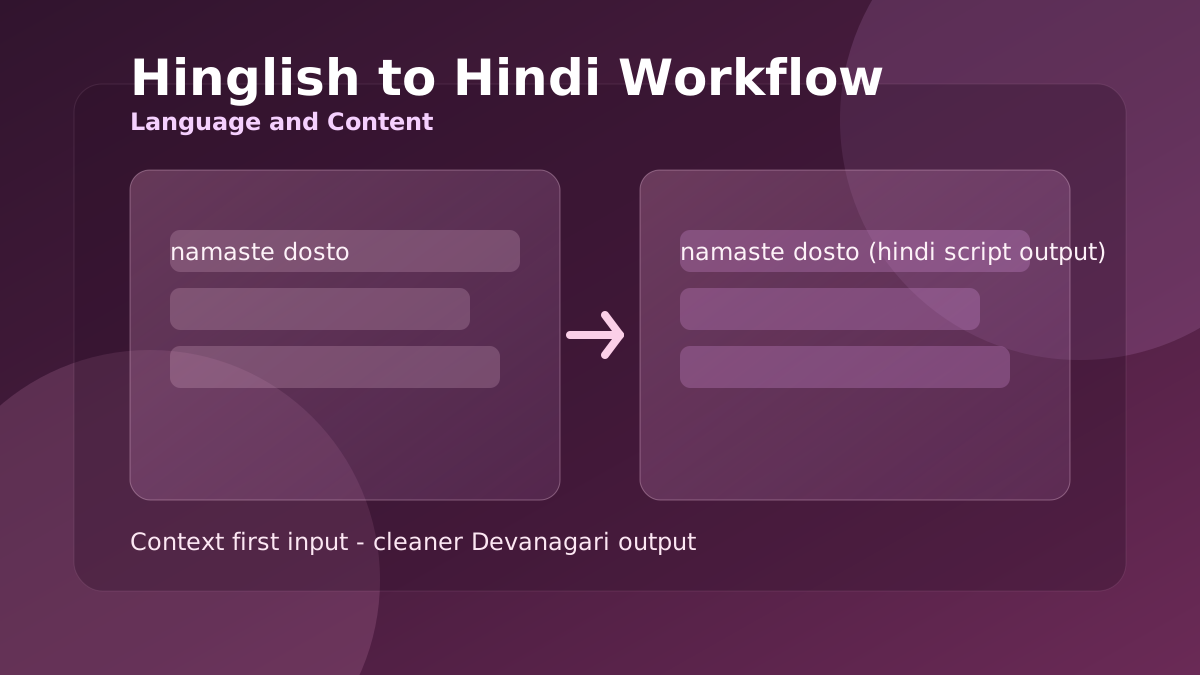
Hinglish to Hindi Workflow for Cleaner Devanagari Output
When Roman Hindi captions look correct but Devanagari output feels awkward, this workflow helps you produce readable Hindi for posts, chats, and support replies.
Privacy-First Browser Tools for Daily Workflows
A browser-first routine for handling client notes, drafts, and sensitive text tasks without pushing raw data to random third-party tools.
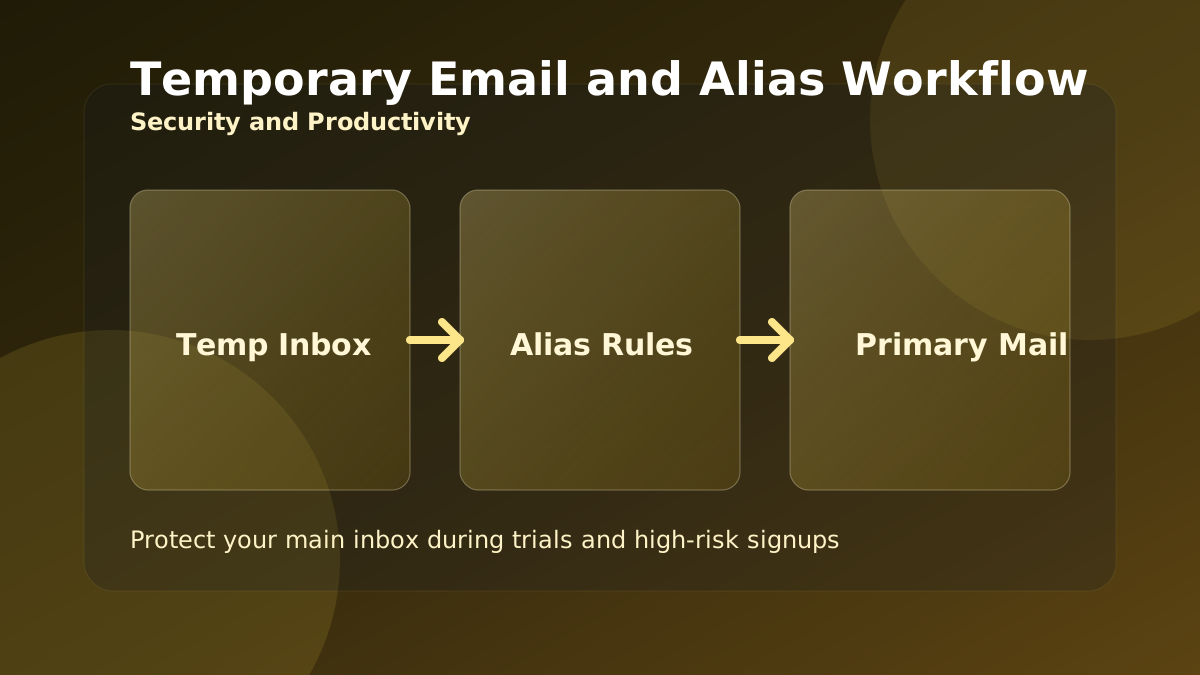
Temporary Email and Alias Workflow for Safer Signups
Use temporary inboxes and aliases the right way to protect your main mailbox during trials, product research, and high-risk signup flows.
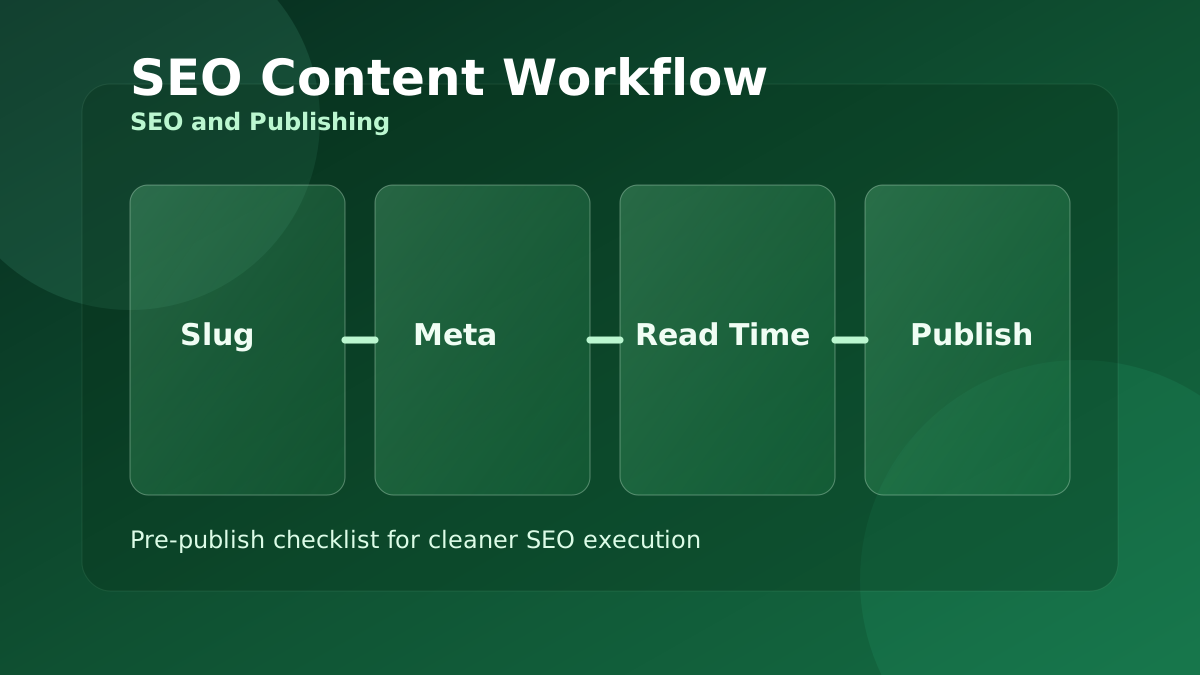
SEO Content Workflow with Meta, Slug, and Reading Time Tools
A practical pre-publish workflow for content teams that need cleaner slugs, stronger metadata, and better readability before publishing.
Compress and Convert Images for Faster, Lighter Web Pages
Large images are the most common reason pages load slowly. This guide shows a simple browser-only routine to resize, compress, and convert images to the right format.
JSON, CSV, and Base64: A Clean Data Conversion Workflow
Moving data between a spreadsheet, an API, and your code means converting formats without corrupting it. Here is a reliable order of operations using free browser tools.
Password and Identity Hygiene with Free Browser Tools
Strong passwords, throwaway emails, and verified downloads are the basics of staying safe online. This guide turns them into a quick, repeatable routine.
Plan Loan EMI, Interest, and Prepayment Without Surprises
The monthly EMI is only half the story. This guide shows how to see the total interest, compare terms, and understand why early prepayment saves the most.
GST and VAT Invoicing Without the Common Errors
Most invoice disputes come from applying tax and discount in the wrong order, or confusing tax-inclusive and tax-exclusive prices. Here is how to get it right every time.
Writing SEO Titles, Slugs, and Meta Descriptions That Work
Before you publish, a few minutes on the title, slug, meta description, and readability pays off in clicks. This is a simple pre-publish checklist using free tools.
Using AI Tools Responsibly for Content and Code
AI helpers can draft a summary, a reply, or a SQL query in seconds. Used well they save time; used carelessly they introduce errors. Here is how to get the upside safely.
A Simple Routine to Improve Typing Speed and Accuracy
Faster typing comes from accuracy and consistent practice, not from rushing. This guide turns the typing tests into a short routine that actually builds skill.
Network Diagnostics in the Browser: IP, DNS, Ping, and Ports
When a site is slow or unreachable, a few quick checks tell you whether the problem is your connection, DNS, or the server. Here is a simple triage order.